





BAF Vietnam Agriculture Joint Stock Company (BAF) has officially signed an agreement to establish a joint venture with Shandong Hekangyuan Group (HKY), China, to develop a series of high-tech poultry projects covering commercial poultry farming, breeding stock production, hatchery operations, and slaughtering. The partnership is aligned with BAF’s integrated value chain development strategy and follows a comprehensive assessment of the Vietnamese domestic market’s growth potential.
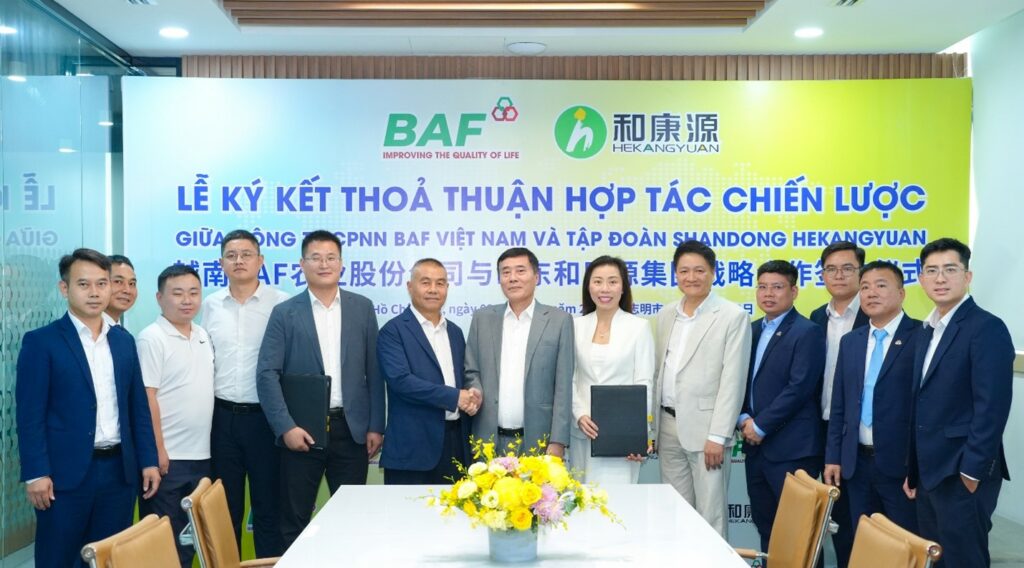
BAF Vietnam enters into a joint venture partnership with a leading international poultry industry group.
Vietnam Ranks Among the World’s Leading Poultry Markets in Farming Scale and Consumption
According to data from the Department of Livestock Production and Animal Health under the Ministry of Agriculture and Environment, in coordination with the Vietnam Poultry Association (VPA), Vietnam’s total poultry population reached nearly 590 million birds by the end of 2025, representing year-on-year growth of 3.7%–4.3%.
Ducks and Muscovy ducks accounted for approximately 27.5% of the national poultry population, equivalent to 160–163 million birds.
Total live-weight poultry production reached approximately 2.6 million tonnes, an increase of 5.9% year-on-year. Duck meat represented an estimated 25%–28% of total production, equivalent to 650,000–720,000 tonnes.
Meanwhile, total poultry egg production reached 21.4 billion eggs, of which duck eggs accounted for approximately 30%–32%, or 6.4–6.8 billion eggs.
From a consumption perspective, Vietnam offers considerable growth potential in the poultry protein segment.
Average poultry meat consumption is estimated at 25–26 kg per capita annually, with duck meat contributing approximately 6.5–7.2 kg per capita per year, equivalent to 2.5–3 ducks per person.
Duck egg consumption is estimated at 65–70 eggs per capita annually.
Consumption growth is expected to be further supported by evolving consumer preferences, particularly the gradual shift from pork toward cleaner, traceable poultry protein products, increasingly recognized as an alternative source of white meat.
Despite this market potential, more than 65% of existing production models remain concentrated in small-scale household farming and traditional free-range or field-based operations.
Although these models typically require lower initial investment, they face structural limitations relating to biosecurity, disease prevention, product traceability, and food safety.
These market opportunities, together with the operating experience and production capabilities of both companies, have provided a strong foundation for the establishment of the BAF–HKY joint venture.
Prior to signing the agreement, the two parties conducted a series of field visits and technical assessments, including reviews of HKY’s breeding and genetic improvement facilities and high-tech hatchery centers in China, alongside evaluations of BAF’s designated livestock development areas in Vietnam.
Building on these assessments, the BAF–HKY joint venture aims to establish an integrated poultry production platform comprising fully enclosed, automated poultry farms; advanced breeding and hatchery facilities incorporating modern genetic technologies; and slaughtering and chilled-processing plants designed to meet stringent food safety and hygiene standards.
Expanding BAF’s Traceable Food Portfolio for Vietnamese Consumers
BAF’s expansion into poultry farming represents a new milestone in the development of its integrated Agriculture–Food ecosystem.
Building on its established position in high-tech livestock farming and safe food production, the addition of poultry is expected to enhance utilization of BAF’s existing Feed – Farm – Food infrastructure and circular agriculture platform.
The expansion will also enable BAF to leverage its logistics capabilities and nationwide distribution network more effectively, creating potential operational synergies across the value chain.
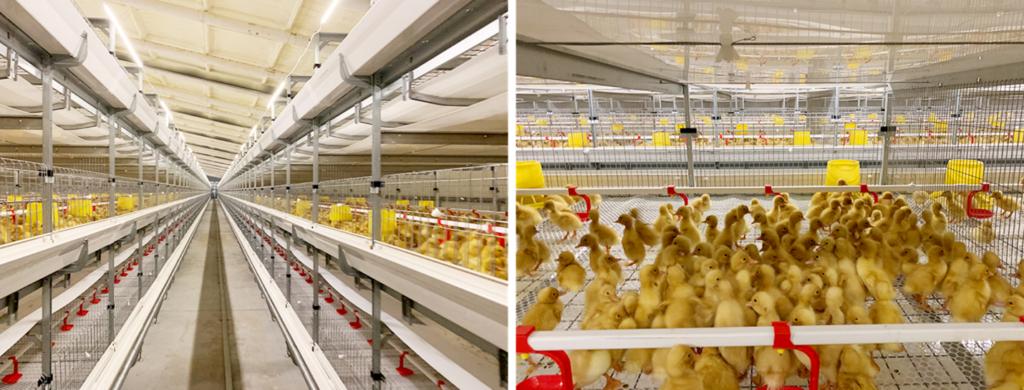 Duck farming model in China.
Source: Shandong Hekangyuan Group (HKY).
BAF’s strategic objective is to diversify high-quality protein sources available to Vietnamese consumers.
By introducing safe and traceable poultry products, with stringent controls covering breeding genetics, nutrition, biosecurity, and slaughtering processes, BAF aims to broaden consumers’ access to reliable food choices alongside pork, which remains the company’s core strength.
Ms. Bui Huong Giang, Chief Executive Officer of BAF Vietnam, emphasized:
“Our joint venture partnership with Shandong Hekangyuan Group represents another important component of BAF’s integrated high-tech livestock value chain and, more broadly, our circular agriculture ecosystem. Beyond expanding production capacity, our ambition is to provide Vietnamese consumers with fresh, high-quality poultry products produced under stringent biosecurity standards, while enriching the diversity of nutritious food choices available to Vietnamese households.”
At the signing ceremony, Mr. Manh Khanh Loi, Chairman of Shandong Hekangyuan Group, commented:
“Vietnam’s livestock industry shares many similarities with China in terms of market potential and consumption patterns. BAF Vietnam has established a well-structured and integrated production platform, making it a suitable partner for implementing large-scale poultry projects. Immediately following the signing of the agreement, we will deploy a team of specialists to work closely with BAF on detailed field assessments and accelerate joint development initiatives, with the objective of bringing the joint venture into effective operation as soon as possible.”
The strategic partnership between BAF Vietnam and a leading Chinese livestock and food industry group represents a new chapter in the growth strategies of both companies.
Beyond creating additional opportunities for business expansion and value chain integration, the joint venture is expected to contribute to the modernization of Vietnam’s poultry industry by supporting its transition toward industrial-scale, biosecure, traceable, and sustainable production models.